
Global markets today painted a cautiously optimistic picture amid a complex mix of macroeconomic signals and policy developments. One of the most significant drivers this week was the U.S. Federal Reserve’s continued dovish tone, which appears to have resonated well with equity markets. Fed Chair Jerome Powell reiterated that while inflation has shown signs of cooling, the path towards sustained 2% inflation is still “bumpy,” which in effect delays rate cuts into 2025. However, Powell also emphasized that the Fed is no longer in a tightening stance, giving equity investors some degree of clarity.
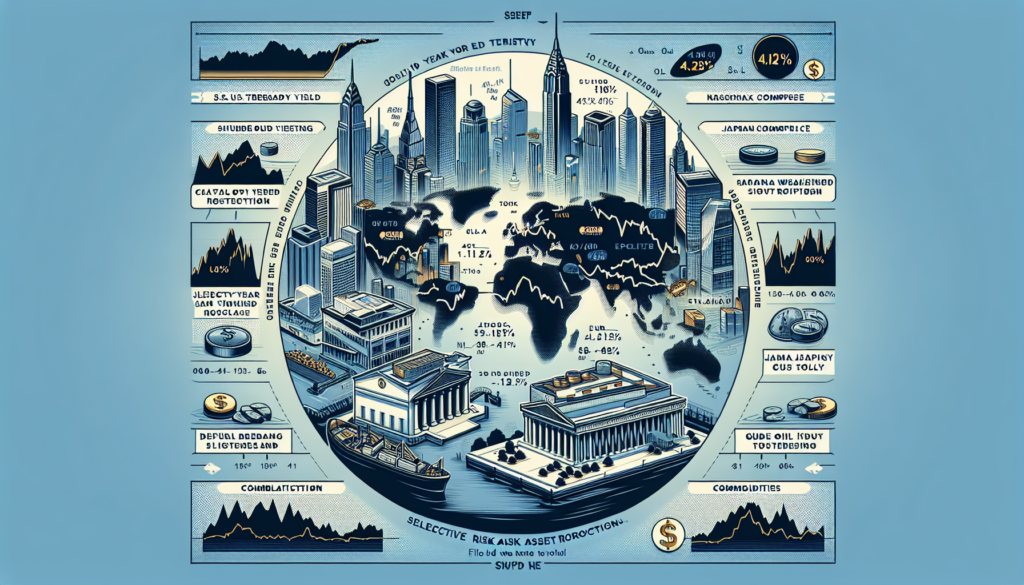
The S&P 500 responded positively, advancing nearly 0.7% in today’s session, led by gains in mega-cap tech stocks such as Apple, Microsoft, and Nvidia. The Nasdaq Composite once again outperformed, signaling market confidence in the technology sector. Perhaps the most telling movement came from the bond market — the 10-year U.S. Treasury yield has now dipped to around 4.12%, further confirming that traders anticipate a slow but steady normalization of monetary policy over the next few quarters.
Europe, in contrast, faced more subdued momentum. Eurozone inflation data released earlier this morning showed a slight uptick in energy prices, raising concerns that the ECB might also delay its initial rate cuts. Germany’s DAX index was flat, while France’s CAC 40 edged down by 0.3%. The euro weakened slightly against the dollar, extending its weekly loss to 0.8%. Personally, this divergence in central bank policy stance — the Fed projecting a longer wait while the ECB remains more cautious — might contribute to a stronger dollar in the coming weeks, especially against the euro and yen.
From an Asian market perspective, Chinese equities remained under pressure. The Shanghai Composite fell 0.6% amid continued investor skepticism about the effectiveness of Beijing’s stimulus measures. The property sector remains a persistent drag, with Evergrande’s liquidation hearing creating new uncertainty. Foreign outflows from China-listed equities have continued for a sixth straight session, in my view reflecting deeper concerns about long-term corporate governance and geopolitical tensions with Western economies. On the flip side, Japanese markets showed remarkable resilience, with the Nikkei 225 gaining over 1.2%, helped by upbeat manufacturing data and yen weakness, which continues to favor exporters.
Commodities also offered insightful signals. WTI crude oil traded lower at $70.85 per barrel, reflecting both weak Chinese demand and rising U.S. inventory levels. Gold held firm near $1995/oz, a sign that investors are still hedging against potential economic volatility even amid the equity rally. In recent days, the commodity trend has been more indicative of risk-hedging behaviors rather than outright fear — something I take as a nuanced signal of cautious confidence rather than bullish exuberance.
All in all, the market’s tone today suggests that investors are selectively rotating into risk assets while maintaining a defensive posture. I’m particularly watching the divergence between growth-led sectors in the U.S. and cyclical underperformance in Europe and Asia — a theme that could become more prominent as we enter the Q1 2026 earnings cycle and gain additional clarity on global policy normalization.