
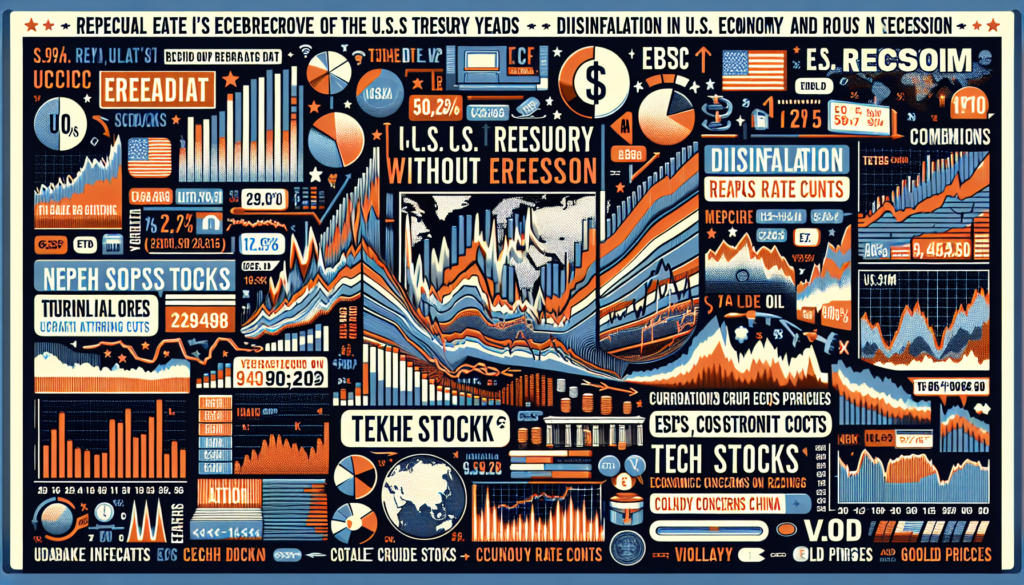
In reviewing today’s market data and news flow from Investing.com, several clear trends are starting to emerge that are shaping global investor sentiment as we head toward the end of 2025. One of the most significant developments is the continued retreat in U.S. Treasury yields, driven primarily by dovish expectations surrounding the Federal Reserve’s interest rate decisions next year. Markets are now pricing in at least three rate cuts in 2026, with the probability of the first cut arriving as early as March increasing to over 70% according to CME’s FedWatch Tool.
As a financial analyst closely monitoring macroeconomic indicators, what’s striking to me is how the softening of key inflationary data is reinforcing the narrative that the U.S. economy is entering a phase of disinflation without slipping into outright recession. The latest Core PCE numbers and retail sales data released today confirmed a slowdown in consumer spending that aligns perfectly with the Fed’s desired rebalancing. Corporate earnings projected for Q1 2026 are also showing downward revisions — not alarmingly so, but enough to temper expectations and push cyclicals into consolidation, especially across the industrial and consumer discretionary sectors.
On the equity front, the S&P 500 edged higher by 0.4% today, rebounding from an early session pullback, aided by strong performances in mega-cap tech stocks. Nvidia, Apple, and Microsoft saw renewed buying interest as investors grew more optimistic about AI-driven growth into next year. Tesla, on the other hand, continued its recent decline after disappointing guidance on vehicle deliveries for Q4 2025. It’s clear that while the “Magnificent Seven” continues to dominate index gains, there’s starting to be more dispersion in performance — something that usually precedes a broader market rotation.
In Europe, the ECB’s latest comments indicated a shift in tone — for the first time, several policymakers openly discussed the potential for rate cuts as early as Q2 2026. The Euro weakened against the U.S. dollar following those remarks, dropping to 1.0825 amid lower German bund yields and downward revisions in German GDP growth forecasts. European equities reacted favorably, with the DAX and EuroStoxx 50 climbing around 0.5%, as lower rates could help stabilize momentum in the Eurozone’s struggling manufacturing sector.
Crude oil prices remain volatile after WTI futures dropped nearly 2% today, trading at around $72 per barrel. This drop is largely due to resurgent concerns over Chinese demand, especially after today’s release of weaker-than-expected industrial output and housing market data in China. The Hang Seng Index reacted negatively, shedding over 1.3% as investor confidence continues to erode amid Beijing’s inability to arrest deflationary pressures despite ongoing stimulus attempts. As an analyst, I’m increasingly wary about Chinese economic data becoming a systemic risk heading into 2026, particularly if property sector contagion spreads toward the financial system more broadly.
Gold extended its rally, briefly touching $2,120 per ounce as real yields fell and geopolitical uncertainties surrounding the Middle East persisted. The safe haven bid remains intact, driven both by macro uncertainty and technical positioning.
From my perspective, the overarching theme in today’s market is transition — away from restrictive monetary policy toward normalization, with asset prices adjusting slowly to the next cycle. There’s a palpable sense of cautious optimism, but also a layer of fragility that suggests any unexpected macro or geopolitical shock could trigger a sharp pivot in sentiment.