
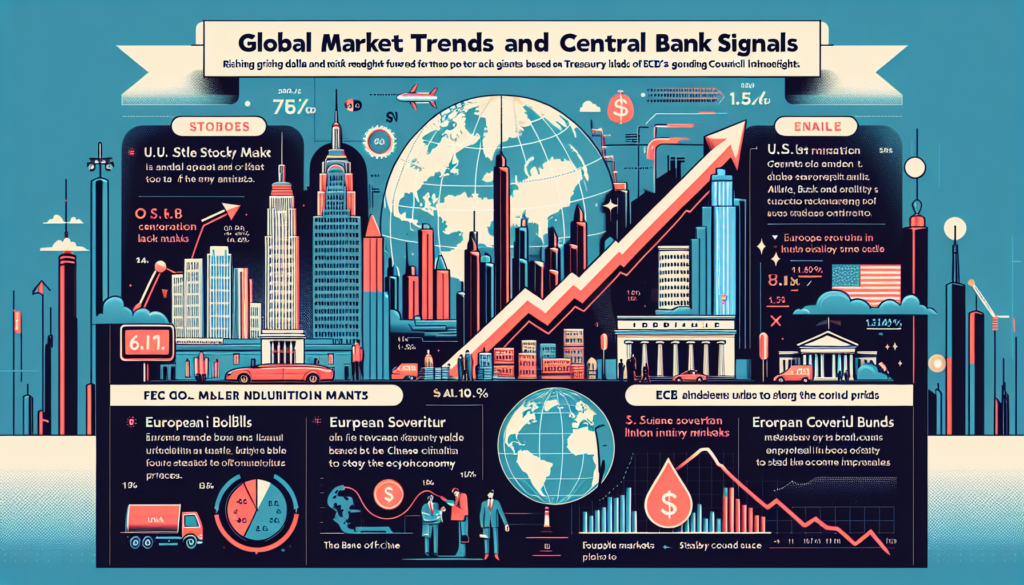
Global markets kicked off the week with a cautious but notably optimistic tone, as fresh economic data and central bank commentary helped shape the direction of key risk assets. From my perspective, today’s price actions and news developments reinforce an increasing divergence among global central banks, but also highlight early signs of a potential cyclical shift benefiting equity markets – particularly in the U.S. and selected emerging economies.
Firstly, U.S. stocks opened higher today, buoyed by strong corporate earnings reports from tech giants and continued investor confidence in the Federal Reserve’s ability to manage a “soft landing.” Microsoft and Alphabet surpassed market expectations in both revenue and EPS in the latest quarterly earnings, which sparked a rally in Nasdaq futures during the pre-market hours. The better-than-expected data removed some doubt about a potential tech slowdown in early 2026, cementing the notion that AI-oriented investment continues to be a key growth engine.
What caught my attention even more was the release of the latest U.S. PCE inflation data, which came in slightly below consensus (Core PCE at 2.8% vs expected 2.9%), reinforcing the belief that inflation is decelerating along the Fed’s desired path. The immediate market reaction – a marginal softening in the U.S. dollar and a drop in Treasury yields – indicates that expectations for the first Fed rate cut in mid-2026 are solidifying. From an asset allocation standpoint, this shift in interest rate expectations could further support the equity risk premium and foster strength in rate-sensitive sectors such as real estate and consumer discretionary.
Meanwhile, on the European front, the ECB’s governing council member François Villeroy de Galhau made dovish remarks early this morning, noting that the central bank now has “greater confidence” in the eurozone’s disinflation trajectory. This contributed to a rally in European sovereign bonds – particularly the Italian 10Y BTPs – and pushed the EUR/USD slightly higher. From where I stand, this will likely lead to a continued easing in European monetary rhetoric, and I expect the ECB to commence a rate cut cycle by June 2026, possibly ahead of the Federal Reserve.
In Asia, markets had a mixed reaction to Chinese industrial profits growing 2.2% YoY in December, offering some relief after two months of contraction. Nonetheless, the Hang Seng remains under pressure due to ongoing structural concerns in the Chinese property market. In my opinion, unless Beijing enacts a more comprehensive stimulus package, foreign investment inflows will remain muted. That said, the People’s Bank of China (PBoC)’s decision to cut the reserve requirement ratio (RRR) by 50bps beginning next week is a significant step forward and may signal the start of a more aggressive policy easing cycle that could support equity valuations in the medium term.
Lastly, energy markets were relatively stable today, with Brent crude holding above $82/barrel. Increased tensions in the Red Sea region have led to slight undercurrents of geopolitical risk premiums, but the lack of a significant spike in oil prices suggests markets are currently pricing in containment of the conflict. However, with tight supply dynamics coming from expected OPEC+ output curbs in Q1, I’m keeping a close eye on inventory data later this week for confirmation of a tightening trend.
All in all, today’s developments affirm growing investor confidence in a globally coordinated, albeit uneven, disinflation process. While risks such as geopolitical tensions and policy missteps remain, I see increasing alignment between macro data and market pricing – a trend that offers interesting tactical entry points in equity and bond markets alike.