
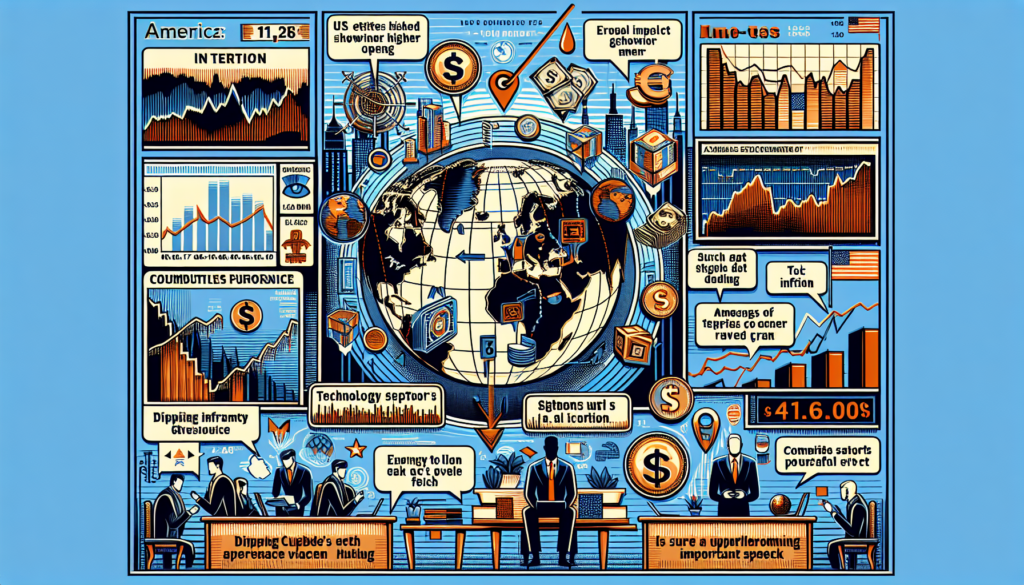
The global financial markets today exhibited a cautious yet optimistic tone, as fresh macroeconomic data and corporate earnings helped shape investor sentiment. U.S. equities opened slightly higher, supported by a better-than-expected Q4 GDP growth rate of 3.4%, suggesting continued resilience in the American economy despite lingering concerns around inflation and interest rates. From my perspective, this data strengthens the probability of a “soft landing” scenario, where the Fed could orchestrate a moderation in inflation without significantly impacting economic growth.
However, the inflation narrative remains complex. The December Core PCE index, reported earlier today, rose 0.2% from the previous month, in line with expectations, and up 2.9% year-over-year. This is the first time in nearly three years that the core figure is below 3%, signaling real progress in the Fed’s fight against inflation. Nevertheless, Federal Reserve Chair Jerome Powell’s upcoming speech remains a critical market catalyst, and investors are hesitant to take aggressive positions until more clarity is provided on the timing of possible rate cuts in 2024. Despite improving inflation metrics, I personally believe the Fed will remain cautious, particularly in light of a still-robust labor market and resilient consumer spending.
The technology sector continues to be a dominant driver of market momentum. Today, Nvidia extended its rally, climbing over 3% intraday after announcing a partnership with several major cloud providers to optimize AI infrastructure. This aligns with the broader tech rally observed this month and suggests institutional investors are still heavily positioned in mega-cap stocks. On the other hand, Tesla reported disappointing earnings yesterday, and its stock dropped nearly 8%, reflecting margin pressures and slower-than-expected delivery forecasts for the upcoming quarters. This divergence within the tech sector reveals an increasingly selective market environment where fundamentals are being scrutinized more strictly—something I see as a healthy correction after months of indiscriminate buying.
In Europe, the ECB’s decision to hold rates steady was widely anticipated, but President Christine Lagarde’s dovish tone caught markets by surprise. Her remarks suggested the bank may be ready to cut rates as early as Q2 if inflation pressures continue to ease. Following this, the euro weakened against the dollar, and European equities saw modest gains, particularly in rate-sensitive sectors like real estate and utilities. From my view, this could mark the beginning of a monetary policy divergence between the ECB and the Fed, with potential implications for FX markets and capital flows.
Commodities showed mixed performance. Crude oil futures dipped slightly after the Energy Information Administration reported a larger-than-expected inventory build, signaling weaker demand. Meanwhile, gold regained some ground, climbing over $2050 per ounce as investors hedged against both geopolitical risk and potential dollar weakness. I continue to monitor gold closely, as it remains a key barometer for investor anxiety and real interest rates.
Overall, today’s market action reflects a transition period—investors are digesting the possibility of peak rates, improving inflation data, but unclear timing for policy changes. I interpret the current environment as one of cautious optimism, with a noticeable rotation into quality assets and a heightened sensitivity to macroeconomic releases and central bank forward guidance.