
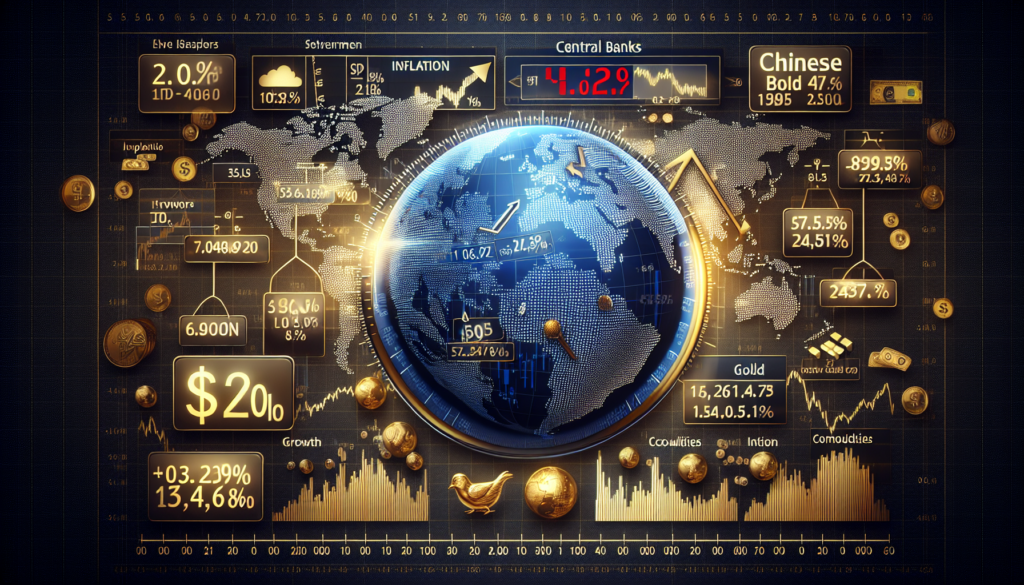
Earlier today, global markets reacted sharply to a combination of mixed inflation data from the U.S., continued uncertainty around Fed policy, and fresh signals from China pointing toward stronger-than-expected economic stabilization. From my perspective, this concoction of data creates a complex backdrop for both equity and currency markets going into year-end, particularly as investors attempt to price in the potential timing and scale of interest rate cuts by major central banks.
The headline CPI figure in the U.S. came in flat for the month of November, as reported on Investing.com, suggesting inflationary pressures may be easing. However, core CPI – which excludes volatile food and energy prices – ticked up slightly more than expected. This has led to a mixed reaction in the bond market: 10-year Treasury yields dropped to 4.09%, reflecting greater confidence that the Fed may have room to pivot in early 2026, but the slight core inflation uptick is keeping some investors cautious. In my view, this tug-of-war between headline disinflation and sticky core prices points to a Federal Reserve that will maintain a “data-dependent” stance for at least the first two quarters of 2026.
Equity markets initially surged on the headline CPI surprise, with the S&P 500 hitting a new 2025 high intraday before paring gains. Tech led the rally, consistent with a declining rate environment narrative. But sectors like financials and industrials lagged, suggesting investors are not universally convinced that rate cuts are imminent. Based on sector flow data, there’s still a strong rotation into defensives like utilities and consumer staples, which I interpret as a hedge against potential earnings volatility in early 2026.
Over in Europe, the ECB decision to hold rates steady was no surprise, but their forward guidance was more dovish than many anticipated. President Lagarde acknowledged softer inflation dynamics across core Eurozone economies. The German 10-year bund yield fell below 2%, its lowest level in months, and the euro weakened to a six-week low against the dollar. In my opinion, this divergence with the Fed adds near-term strength to the USD, particularly against the euro and yen, which could pressure commodities priced in dollars.
China’s latest trade balance surprised on the upside, with both exports and imports rising for the second consecutive month. This, combined with better-than-expected retail sales data, points to an early-stage recovery in domestic consumption. Chinese equities on the Hang Seng surged over 3%, led by tech and consumer discretionary stocks. However, I remain cautious. The real estate sector continues to show structural weakness, and without meaningful fiscal reform, I believe the rebound may lose momentum by Q2 2026.
Commodities were mixed. Gold held firm around $2,030/oz despite a strengthening dollar, a sign that central bank demand and geopolitical hedging remain strong. Crude oil continues to slide, with Brent falling below $73 despite OPEC’s production cut pledges. Market skepticism around compliance and slowing global demand growth seem to be the key drivers here.
Overall, the markets are attempting to price in a Goldilocks scenario — cooling inflation, resilient growth, and dovish central banks — but in my view, this optimism may be premature. With corporate earnings season approaching and rate uncertainty still prevalent, I expect continued choppiness and sector-specific dispersion.