
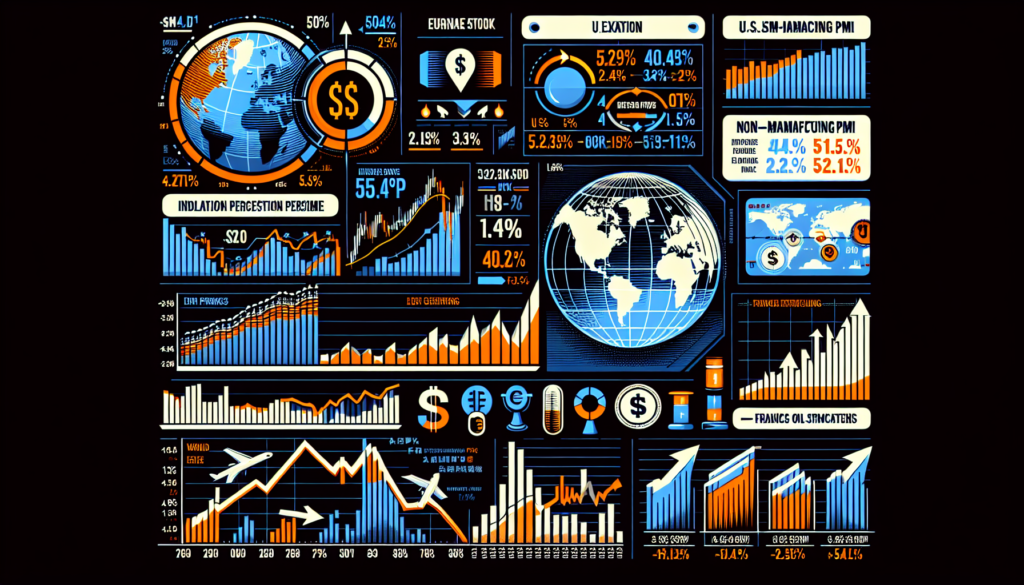
Today’s market sentiment, as observed on Investing.com, paints a nuanced and somewhat cautious picture of global financial markets, particularly in the wake of mixed macroeconomic data and evolving geopolitical dynamics. As a financial analyst, I find that the current momentum across equities, commodities, and forex markets continues to be influenced heavily by central bank commentary, inflation trends, and a more uncertain outlook for global growth entering Q1 2026.
One of the key takeaways from today’s release was the slightly softer-than-expected U.S. ISM Non-Manufacturing PMI, which came in at 49.8 versus the forecasted 52.4. This drop below the 50 threshold for the first time in over a year signals contraction in the service sector and suggests slowing momentum in what has otherwise been a resilient component of the U.S. economy. Investors responded with heightened trepidation, as this data fuels speculation that the Fed may be inching closer to an interest rate cut earlier than previously projected.
At the same time, several Federal Reserve officials—including Atlanta Fed President Raphael Bostic—emphasized that while inflation indicators are moderating, the central bank still needs “greater confidence” before adjusting policy. The juxtaposition of cooling economic activity and cautious Fed rhetoric has created a conflicting environment for equities. Today, the S&P 500 showed mild losses, failing to break through the immediate resistance level at 4,800. The tech-heavy Nasdaq also retreated, with notable weakness in AI-related stocks which had been leading the recent rally.
From an international perspective, the Eurozone’s flash inflation eased more than expected to 2.4%, increasing speculation that the European Central Bank may consider an earlier pivot in monetary policy, possibly by mid-year. However, the recent rise in energy prices—most notably oil, which climbed over 3% today due to Middle East tensions escalating between Iran and Western allies—adds a layer of complexity for central banks trying to balance inflation and economic stagnation.
China’s market, meanwhile, remains lackluster. Despite the PBoC injecting additional liquidity through reverse repos and cutting the reserve requirement ratio (RRR) last week, Chinese equities failed to rally meaningfully. Confidence remains low among both domestic and global investors, as today’s Caixin Services PMI showed another month of soft expansion at 51.3, reflecting an ongoing struggle to ignite consumer spending and private investment.
Forex markets responded accordingly. The U.S. Dollar Index (DXY) edged slightly lower, reflecting the softer U.S. data and growing expectations of a Fed cut by June. The euro strengthened modestly, aided by lower inflation reports but supported by declining U.S. yields. Interestingly, the Japanese yen gained sharply against the greenback, breaking below the 144 level, after BoJ Governor Ueda hinted that yield curve control (YCC) adjustments may come sooner than markets had anticipated. This move has catalyzed speculation that Japan might finally exit negative interest rate territory in the first half of 2026.
In the commodities space, gold crossed back above $2,070 an ounce, benefiting from lower yields and a risk-off sentiment. Crude oil, as previously mentioned, gained ground due to geopolitical anxieties, though the longer-term demand outlook remains pressured by concerns over global growth and increasing U.S. shale supply.
Risk sentiment across all asset classes seems fragile. Forward-looking indicators lean more towards a cautious stance rather than a bullish continuation. Overall, today’s data reinforces the view that while inflation concerns are receding, the softening economic backdrop and central bank hesitance to commit to policy easing are creating a liminal state where markets remain data-dependent and highly reactive.