
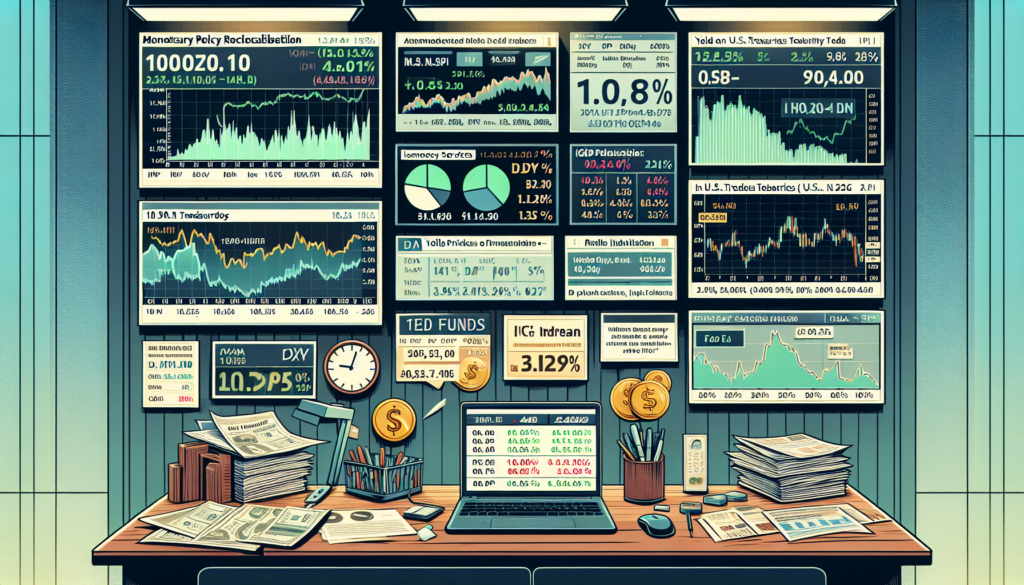
As of December 4th, 2025, 1:00 PM, the markets continue to ride a wave of cautious optimism, with investors digesting recent macroeconomic data and central bank signals ahead of the year-end. While equities have shown resilience in the face of geopolitical headwinds, there’s a noticeable shift in the narrative towards monetary policy recalibrations and a possible pivot in 2026.
Today’s financial landscape is notably shaped by the latest U.S. jobless claims data and a weaker-than-expected ISM services index. Weekly jobless claims ticked slightly higher than anticipated, suggesting possible early signs of a cooling labor market. As someone who closely watches the labor indicators as a forward-looking gauge for monetary policy shifts, I interpret this as a mild confirmation that the rapid rate hikes of 2022 to 2024 are finally filtering through the economy.
The ISM Services PMI coming in below expectations further reinforces the theme of economic deceleration, albeit not a recessionary one. These soft data points are being embraced by equity markets, particularly in the U.S., as they strengthen the likelihood that the Federal Reserve may initiate rate cuts by mid-2026. Fed funds futures, as seen today on Investing.com, are now pricing in two possible rate cuts by September 2026, with a 68% probability of a cut as early as June.
In the fixed income space, yields on 10-year U.S. Treasuries dropped to around 3.98%, falling below the psychological 4% threshold for the first time since mid-2025. I see this drop as a sign that risk appetite is returning, especially as inflation expectations have moderated. The latest CPI and PCE data had already shown inflation cooling towards the Fed’s 2% target, and today’s services weakness adds to the disinflationary momentum.
Tech stocks are leading the charge higher once again. The NASDAQ Composite is up over 1.2% at the time of writing. Mega-cap tech names such as Microsoft, Apple, and Nvidia are benefiting from both the AI-driven productivity narrative and a more benign interest rate outlook. As a market participant, it’s difficult to ignore the clear rotation into growth stocks as the rate environment begins to pivot.
On commodities, gold continues to hover near its all-time highs, trading around $2,090 per ounce. This remains in line with my earlier thesis that geopolitical uncertainty, combined with Fed dovishness, supports gold as both a hedge and a speculative asset. Crude oil has slipped again, now under $74 per barrel, reflecting weak global demand expectations, particularly from China, whose latest PMI readings remain in contraction territory.
From a currency perspective, the U.S. dollar has softened, with the DXY index down to 103.10. The euro and yen are gaining ground amid expectations for a more synchronized global rate easing cycle in 2026. I’m watching this shift closely as it will have material implications for carry trades and emerging market capital flows in the quarters ahead.
Overall, the market seems to be settling into a year-end rally mode grounded not in exuberance, but in data-driven expectations of policy normalization. While risks remain, particularly around corporate earnings and global growth, I believe today’s developments are consolidating the narrative of a soft landing scenario.