
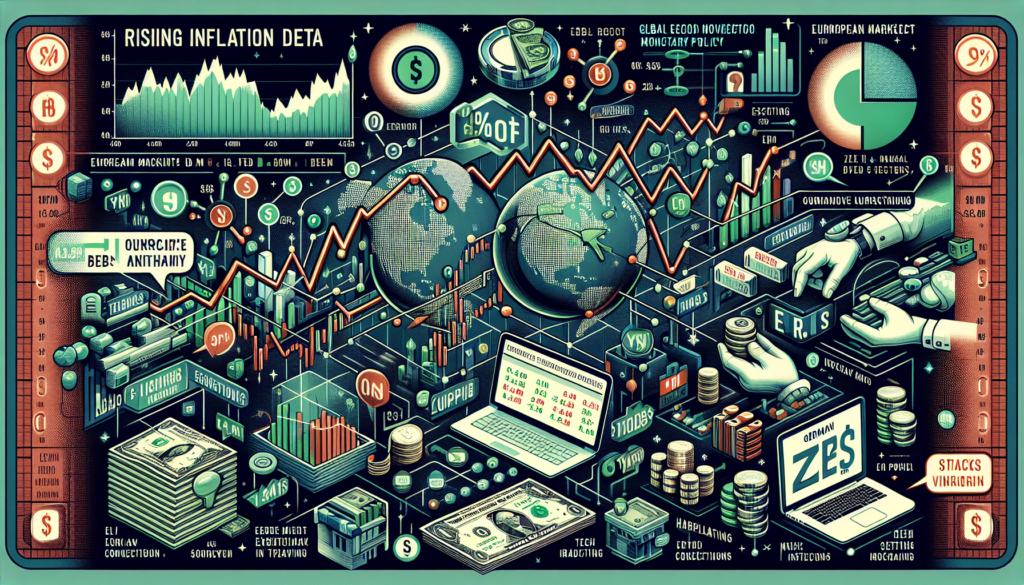
As I closely monitor today’s financial markets on Investing.com, several critical developments stand out that shape my current macroeconomic and investment perspective. One of the most prominent narratives remains the trajectory of the U.S. Federal Reserve’s monetary policy. The latest CPI data—released just this morning—showed a modest uptick in inflation, rising 0.2% month-over-month in November, slightly above the consensus estimate of 0.1%. This pushed the annualized rate to 3.3%, reinforcing the notion that inflation may be more persistent than markets had hoped earlier in the quarter.
The equity markets initially reacted with caution. The S&P 500 opened flat but experienced mild volatility as traders recalibrated expectations regarding rate cuts. Prior to the CPI release, futures markets were pricing in nearly 150 basis points of rate cuts for 2024. But with labor market data still showing resilience and inflation sticking above the Fed’s target, the probability of a March cut has drifted lower according to the CME FedWatch Tool. From my vantage point, this underscores a continued period of monetary policy ambiguity where economic data surprises can lead to swift market re-pricing.
Oil prices also caught my attention today. WTI crude is down over 2% in intraday trading, slipping below $71 per barrel. This comes despite geopolitical instability in the Middle East and OPEC+’s commitment to production cuts. The price action indicates that markets are more focused on demand-side concerns, especially after weak Chinese import data and the downgrading of global GDP forecasts by major institutions like the IMF and World Bank. As someone analyzing commodity-linked equities and emerging market currencies, this bearish oil sentiment makes me cautious about overexposure to oil-exporting nations in the short term.
In Europe, the market is digesting the ECB’s latest forward guidance set to be announced tomorrow. Today’s German ZEW Economic Sentiment Index came in higher than expected, pointing to improved confidence among institutional investors. However, Eurozone core inflation remains stubborn. That said, the euro has been relatively stable versus the dollar today, holding just above the 1.08 level, likely reflecting a balanced tug-of-war between relative growth expectations and policy divergence with the Fed.
Another key market mover is the tech sector, particularly in the U.S., where mega-cap stocks like Apple and Nvidia are under some pressure. Apple faces headwinds after analysts downgraded its revenue expectations in China due to increasing competition from local brands like Huawei. Meanwhile, Nvidia is reacting to renewed scrutiny from Washington on chip exports to China. These geopolitical and regulatory risks are starting to act as a cap on the tech sector’s recent rally. As an investor with a growth tilt, I find it increasingly important to diversify beyond U.S. large-cap tech and explore opportunities in less crowded sectors and geographies.
Overall, the markets today reflect a growing sensitivity to macro data and policy guidance. While investors have enjoyed a strong year-end rally in 2024, I believe we’re entering a phase where fundamental metrics—particularly inflation, wage growth, and central bank rhetoric—will dominate price action. The disinflation narrative, which has powered much of the optimism, is being tested again, and positioning needs to become more nuanced to avoid downside risk.