
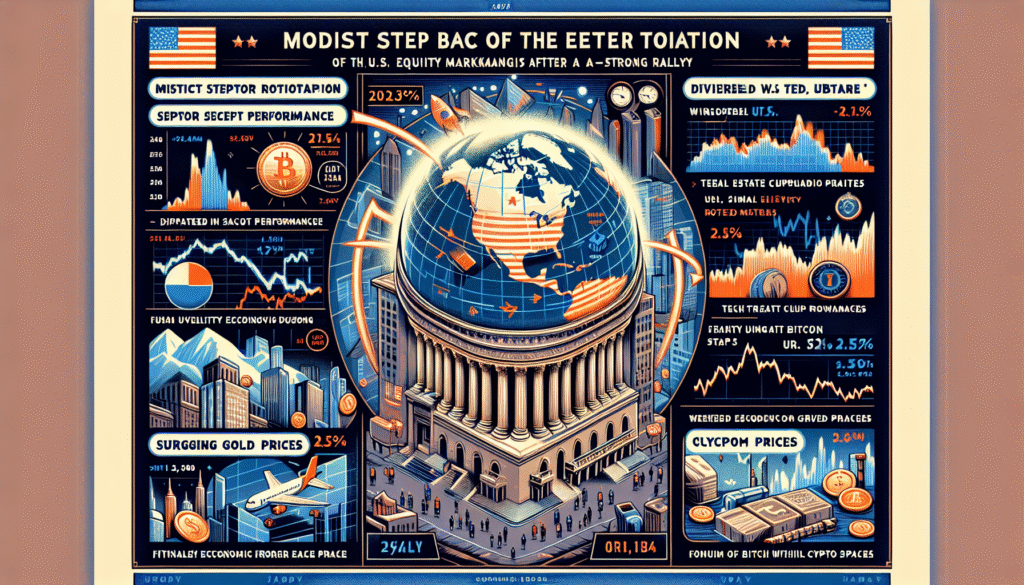
Today’s market action on December 3rd, 2025, paints a fascinating picture of growing investor caution and sectoral rotation as the year winds to a close. From my vantage point, the dominant themes remain inflation resilience, central bank recalibration, and persistent geopolitical uncertainty — all of which are contributing to a more defensive tilt in global portfolio allocations.
The U.S. equity markets took a modest step back after their impressive November rally. The Dow Jones Industrial Average closed slightly lower, while the S&P 500 and Nasdaq Composite showed marginal losses. What stands out most to me is the divergence in sector performance: interest-rate-sensitive sectors like utilities and real estate showed relative strength today, while high-growth tech names, particularly semiconductors and AI-linked companies, came under pressure. This rotation suggests that investors are re-evaluating the aggressive positioning that followed the October CPI report, which signaled a slowdown in year-over-year inflation.
Bond markets, meanwhile, are telling their own story. U.S. 10-year Treasury yields have continued to retreat, falling below 4.15% today. This reinforces the market’s growing conviction that the Federal Reserve is done tightening and may even open the door for rate cuts in mid-2026. However, Powell’s recent commentary earlier this week reiterates the Fed’s desire to see more sustained evidence of inflation cooling before pivoting decisively. From my perspective, the pricing-in of a dovish Fed turns the risk-reward dynamic for equities more cautious, especially considering how much easing is already baked into forward rate expectations.
Commodities added another layer of complexity. WTI crude dipped below $73 per barrel amid signs of weakening demand from China and persistent concerns about oversupply, despite OPEC+ efforts to enforce deeper cuts. It’s notable that energy stocks did not follow oil lower in a one-to-one fashion, suggesting that investors still see value in their cash flow generation. Gold, on the other hand, surged to fresh highs above $2,080 per ounce, supported by falling yields and a weaker dollar. The strength in precious metals underscores growing hedging behavior — a sign that investors are not completely buying into the soft-landing narrative.
Internationally, Europe is struggling with tepid economic data. Today’s German factory orders came in below expectations, reinforcing recession fears across the eurozone. The ECB is walking a tightrope between inflation containment and economic support, but the latest PMI readings suggest the region remains in contraction. This weakening European outlook is putting further pressure on the euro, which slipped against the dollar. At the same time, China’s markets remain volatile, and today’s Caixin Services PMI, although slightly expansionary, failed to lift sentiment meaningfully. Global investors remain skeptical of the effectiveness of Beijing’s stimulus measures.
In the crypto space, Bitcoin consolidated around $41,800, continuing its remarkable resurgence through Q4. The momentum is largely driven by growing anticipation that the SEC will approve a spot Bitcoin ETF in early 2026. While speculative fervor is undoubtedly a driver, I think institutional involvement is also giving the asset class a new layer of credibility. However, volatility remains high, and regulatory unknowns still loom large.
Today’s cross-asset moves point to an increasingly cautious investment environment, where positioning is beginning to reflect both late-cycle dynamics and a potential policy inflection point. From my perspective, the market is delicately balancing between optimism for a soft landing and the realities of lingering macro risks.