
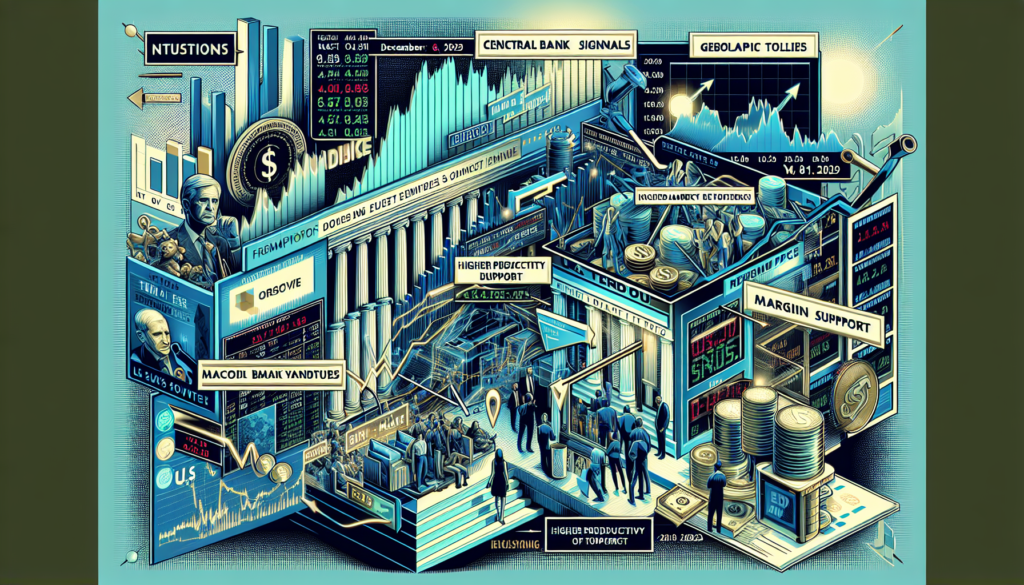
As of December 8th, 2025, at 4:00 PM, the current market trends reflect a complex interplay of macroeconomic signals, central bank policies, and ongoing geopolitical developments. Today’s market activity, particularly observed on Investing.com, reveals a cautious but slightly optimistic stance among investors as they react to a mix of U.S. economic data and global risk sentiment.
One of the most significant drivers today has been the non-farm productivity data released earlier in the day, which came in stronger than expected. This reinforces the idea that the U.S. labor market remains resilient despite the elevated interest rate environment. The higher productivity figures suggest that corporate margins may see support going into Q1 2026. Additionally, the Unit Labor Costs data showed only a modest uptick, which markets interpreted positively, as it alleviates some concerns about wage-push inflation reaccelerating.
U.S. Treasury yields trended lower throughout the afternoon session, with the 10-year yield dipping below 4.1% again, reflecting growing market belief that the Federal Reserve might begin easing in the second quarter of 2026. Fed Fund Futures are now pricing in a 75% chance of at least one rate cut by the June 2026 meeting, a notable increase compared to just two weeks ago. This shift in expectations follows a series of Fed commentary hinting at a potential policy pivot, contingent on continued disinflation and labor market stability.
Equity markets responded accordingly. The S&P 500 gained approximately 0.6%, while the Nasdaq saw a more robust 0.8% increase, driven largely by a rebound in mega-cap tech. Investors are increasingly rotating back into growth-oriented sectors, betting that a policy pivot could reignite momentum in tech and innovation stocks. NVIDIA and Microsoft led the day’s gains with strong volume, suggesting institutional accumulation.
On the commodities front, gold prices climbed for a third consecutive session, trading just above $2,080/oz, as real yields dip and the dollar consolidates. The U.S. Dollar Index (DXY) tested the 103.00 level, unable to break higher despite a relatively hawkish tone from some ECB policymakers. This indicates that investor focus remains heavily on the Fed and the broader U.S. economic narrative.
Crude oil prices, however, continued to slide, with WTI futures falling below $72/barrel. The downside was driven by growing concerns over diminishing Chinese demand and increasing U.S. inventories reported last week. Despite recent OPEC+ commitments to voluntary cuts, markets remain skeptical about their enforcement and long-term efficacy.
From a personal analytical perspective, today’s movements reinforce the idea that we are in a late-cycle economic phase, where markets are highly sensitive to signaling from central banks. The challenge for policymakers now is to balance inflation control without triggering a hard landing. Market participants appear to be betting that the “soft landing” narrative remains intact for now—but that confidence could shift quickly with any surprise inflation reading or geopolitical shock.