
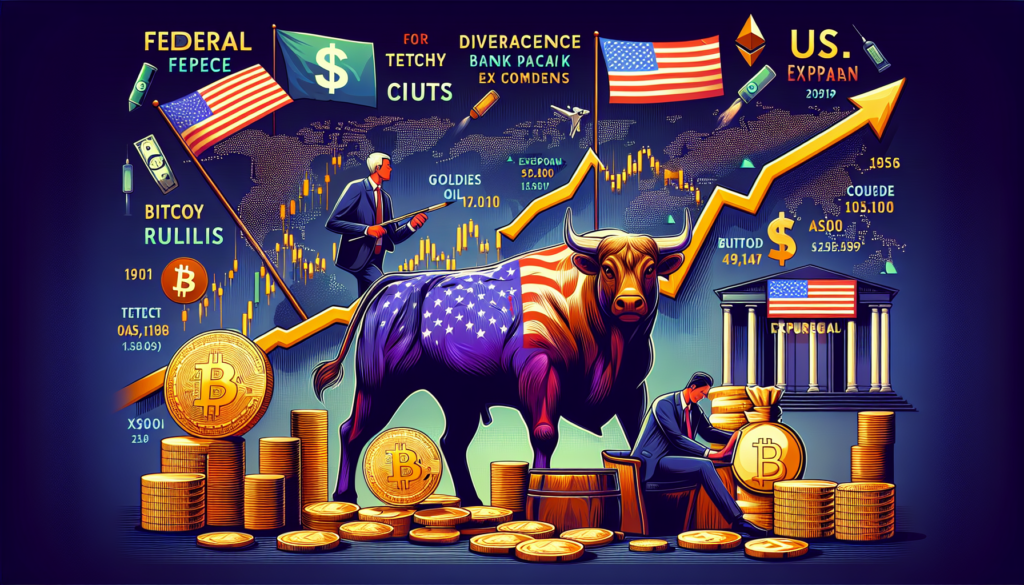
The latest market developments as reported on Investing.com today have painted a complex yet revealing picture of global financial sentiment as we head into Q1 2026. As I review the cross-asset shifts, lingering macroeconomic uncertainties remain a key driver, yet there are also notable pockets of strength and resilience — especially in U.S. equities and select commodities.
Equity markets responded strongly today, largely lifted by dovish language from the Federal Reserve’s most recent commentary. Fed Chair Jerome Powell emphasized that, while inflation still requires close monitoring, the central bank sees a clearer path toward soft landings and hinted at the possibility of rate cuts beginning around mid-2026. This led to a rally in tech-heavy indices, with the Nasdaq climbing over 1.5% intraday, and the S&P 500 approaching new all-time highs. From my perspective, investor appetite for risk is reigniting, particularly in sectors like semiconductors and AI-linked technology stocks, which saw outsized gains on renewed earnings optimism and easing rate pressure.
On the commodity front, crude oil prices saw modest upward movement following data indicating a decline in U.S. crude inventories, as well as supply disruptions from Libya. Brent crude pushed past the $83 per barrel mark. However, I remain cautious in this sector given potential demand-side weakness from Europe, where industrial production continues to contract, evidenced by today’s German PMI showing weakness for the sixth consecutive month. The divergence between U.S. and European economic trajectories continues to widen, and I view this as a tailwind for dollar strength in the near term.
Indeed, forex markets reflected this dynamic. The U.S. Dollar Index (DXY) rebounded slightly after last week’s softness, buoyed by safe-haven inflows and relatively stronger U.S. economic data. Meanwhile, the euro dipped below 1.09, pressured by ECB officials signaling a more dovish lean as inflation in the eurozone cools faster than expected. Personally, I expect the euro to remain range-bound with downward bias unless Germany or France posts upside surprises in GDP or inflation figures.
Gold prices also rose slightly above $2,050/oz today, driven more by geopolitical hedging than overnight interest rates. Rising tensions in the South China Sea, particularly involving U.S. and Chinese naval pressures, are stoking a modest safe haven bid. While I don’t see this as a full risk-off environment, investors are clearly rotating a fraction of their capital into precious metals and defensive assets, hedging against persistent geopolitical instability.
As for cryptocurrencies, Bitcoin held firm above the $46,000 level after the recent approval of multiple spot Bitcoin ETFs in the U.S. This has brought significant new inflows from institutional investors. I believe the SEC’s decision marks a structural shift for crypto, potentially allowing Bitcoin to behave increasingly like a macro asset class rather than a pure speculative vehicle. Ethereum also saw supportive flows, particularly with anticipated upgrades to the network expected by Q2.
Overall, today’s market tone felt cautiously constructive. Investors seem to be placing calculated bets on a soft landing scenario in the U.S., while remaining defensive toward regions like Europe and parts of Asia. Cross-asset correlations are coming back into play, and it’s evident that expectations for central bank policies—especially the Fed and ECB—will continue to steer market direction in the weeks ahead.