
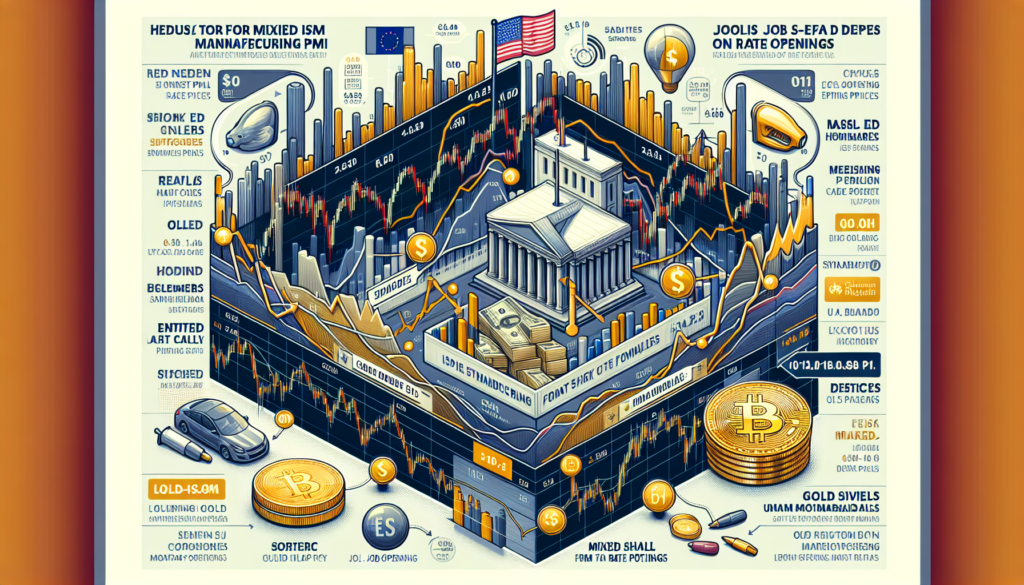
Markets today are reacting with remarkable sensitivity to disjointed macroeconomic signals, reflecting a broader uncertainty that’s been brewing for several months. From my vantage point, this week’s movements in U.S. equities—alongside the recent softness in the dollar and discrepancies in bond yields—illustrate an inflection point that investors are wrestling with: whether the global economy is heading for a soft landing, or if persistent inflation and geopolitical risks will derail recovery efforts.
This morning on Investing.com, key headlines focused on the U.S. Non-Farm Payroll (NFP) data due tomorrow, which is already weighing heavily on sentiment. Ahead of that release, we’ve observed mixed data: while ISM Manufacturing PMI came in slightly below consensus at 48.7, indicating contraction in the sector, the JOLTS job openings still indicate tightness in the labor market with over 9 million positions unfilled. These contradictory indicators make it difficult to predict the Fed’s next move.
Today’s pullback in the S&P 500 and NASDAQ, which both opened in the red, seems more like a breather after the sustained January rally, rather than the beginning of a downtrend. Tech stocks, particularly high-growth AI names like NVIDIA and AMD, took a hit after exceptionally strong performance in recent weeks, signaling some near-term profit-taking. At the same time, energy stocks bucked the trend thanks to a spike in oil prices: WTI crude jumped back above $77 amid growing Middle East tensions, especially after last night’s drone strikes intensified conflict fears.
In the FX market, the U.S. dollar weakened slightly despite signs of resilience in the U.S. labor market. The DXY index declined to just under 103, driven more by strength in the euro and yen than by intrinsic dollar weakness. The ECB minutes released today showed a cautious tone on rate cuts, signaling that while rate reductions could occur in mid-2024, the bank is far from certain. Interestingly, the BOJ’s stance continues to raise eyebrows, especially with hints of ending ultra-loose monetary policy as inflation begins to stick above their 2% target. This divergence in central bank outlooks is contributing to indecision across global asset classes.
Bond yields are particularly telling at this stage. The U.S. 10-year Treasury has edged down to 3.92%, reflecting a partial shift toward risk-off sentiment and increasing bets that the Fed might cut rates sooner than expected—perhaps by June instead of September, which was conventional wisdom just weeks ago. Fed futures pricing shows over 130bps of cuts expected in 2024, but this might prove overly optimistic if the economy remains resilient.
Commodity traders should also take note of today’s surge in gold prices, which touched $2065 per ounce. This move suggests increased hedging, not just against inflation risks but geopolitical instability as well. Bitcoin also resumed its upward path, reclaiming the $43,000 level—most likely supported by expectations of looser monetary policy and inflows into U.S. spot ETFs, which continue to attract institutional attention post-SEC approval.
Overall, today’s financial market movements signal a market in limbo—caught between the narratives of accommodative pivots and persistent macro uncertainty. While risk assets remain in favor, the undercurrents are increasingly dominated by shifting central bank tones, geopolitical flashpoints, and the profound question of whether inflation has truly been tamed or merely paused.