
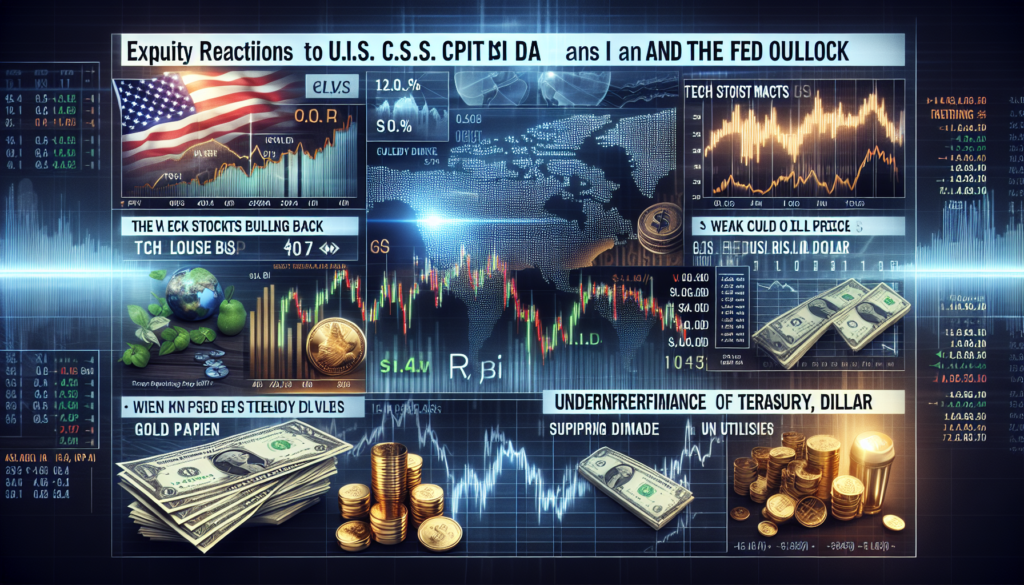
After closely monitoring today’s market dynamics on Investing.com, it’s clear that sentiment is once again edging toward caution, with investor confidence delicately balanced between inflationary concerns and central bank signaling. The latest U.S. CPI data released this morning came in slightly above expectations, with core inflation rising 0.3% month-over-month compared to the market’s consensus of 0.2%. This subtle yet crucial uptick has led to an immediate reassessment of the Fed’s potential policy path heading into early 2026.
The equity markets initially reacted with mild volatility — the S&P 500 opened lower but stabilized within the first hour of trading, while the Nasdaq saw a sharper dip as rate-sensitive tech stocks pulled back. Big tech names like Nvidia, Apple, and Amazon were under pressure, largely due to the recalibration of interest rate expectations. Treasury yields, in parallel, jumped noticeably. The 10-year yield pushed back above 4.35%, its highest level in two weeks, reflecting the market’s growing skepticism about a rapid rate cut cycle.
From my analysis, what we’re witnessing is a classic tension between macroeconomic data and the narrative of easing monetary policy. Ever since Chair Jerome Powell’s relatively dovish language in the last FOMC meeting, markets had begun to price in multiple rate cuts in 2025. However, today’s CPI print throws a wrench into that sentiment. It doesn’t completely derail the prospect of cuts — especially with the labor market showing early signs of moderation — but it certainly introduces a layer of uncertainty that wasn’t priced in even 24 hours ago.
On the commodities front, gold saw a minor rally, trading back above $2,020 per ounce as investors sought a hedge against both inflation and equity uncertainty. Crude oil prices, meanwhile, slipped again amidst weak demand data from China and rising U.S. inventories. Brent crude is now struggling to stay above the $74 mark, signaling underlying global demand weaknesses that could spill over into earnings outlooks for energy companies in Q1 2026.
What also caught my attention was the performance of the U.S. dollar, which strengthened broadly following the inflation data. The dollar index (DXY) is back above 104.5, gaining ground against both the euro and the Japanese yen. This suggests that investors are moving into defensive assets, anticipating that the Fed may have to hold rates higher for longer. Currency markets are confirming what the bond markets are hinting at: the inflation fight isn’t over yet.
Looking at sector performance, financials were marginally higher, benefiting from rising yields, while real estate and utilities lagged — a classic rotation pattern when interest rate expectations shift upward. This rotation confirms that institutional flows are actively adjusting for a potentially “higher-for-longer” interest rate regime rather than a soft-landing assumption.
In conclusion, today’s market action underscores how sensitive trades remain to even marginal changes in inflation data. The path forward for the Fed seems less clear-cut than it did just days ago, and while long-term bulls may not be panicking, they’re certainly repositioning.